Showing posts with label Keyboard. Show all posts

Monday Music Quote: Annie Lennox

Annie LennoxCover of Annie Lennox


“Ask yourself: Have you been kind today? Make kindness your daily modus operandi and change your world.” -- Annie Lennox


Maybe you like Annie Lennox music, maybe you don't but I sure do love her quote.


C F C F C F G C F C F C F G
Walking on walking on broken glass (2x)

F C F C F C F G
1. You were the sweetest thing that I ever knew
F C F C F C F G
but I don’t care for sugar honey if I can’t have you.
Am C F C G/Fadd9 Am
Since you’ve abandoned me my whole life has crushed.
Em
Won’t you pick the pieces up
F G C
’cause it feels just like I’m walking on broken glass.


Refrain 1:
C F C F C F G C F C F C F G
Walking on walking on broken glass (2x) [erstes Mal: Oooh!]

Am G/Fadd9
2. The sun’s still shining in the big blue sky
C F C F C F G
but it don’t mean nothing to me.
F F/G C F C F C F G
Oh, let the rain come down, let the wind blow through me!
Am G/H C F C G/Fadd9 Am
I’m living in an empty room with all the windows smashed
C
and I’ve got so little left to lose
C/G G
that it feels just like I’m walking on broken glass.


Refrain 1 (1x)

Bridge:
C/F B Am/F
And if you’re trying to cut me down you know that I might bleed
C/F B Am/F
’cause if you’re trying to cut me down I know that you’ll succeed.
C/F B Am/F
And if you want to hurt me there’s nothing left to fear
C/F B Gsus4 G
’cause if you want to hurt me you’re doing really well my dear.


Zwischenteil: C F C F C F G (2x)

F F/G C F
3. Now everyone of us was made to suffer,
C F C F G
everyone of us was made to weep
F F/G C F
but we’ve been hurting one another


C F C F G Am
And now the pain has cut too deep
C/G
So take me from the wreckage,
F C G/Fadd9 Am
save me from the blast!
G/Fadd9
Lift me up and take me back!
F Gsus4
Don’t let me keep on walking - Don’t let me keep on walking

I can’t keep on walking on - keep on walking on
G
I can’t keep on walking on - Don’t let me Don’t let me
C
broken glass!


Refrain 1 (2x)

Refrain 2:
C F C F C F G C F C F C F G
 
Walking on walking on broken glass 


You might be interested in learning about this music resource, 
the vocal mastery system.
Vocals

If you sight read music, here's a free download of the song, 
Walking On Broken Glass.
Annie Lennox.pdf

Best, 
LadyD

Enhanced by Zemanta

I Left My Heart In San Francisco: Tony Bennett


I LEFT MY HEART IN SAN FRANCISCO
(Tony Bennett)
 
The loveliness of Paris
Seems somehow sadly gay
The glory that was Rome
Is of another day
I've been terribly alone
And forgotten in Manhattan
I'm going home to my city by the bay.

I left my heart in San Francisco
High on a hill, it calls to me.
To be where little cable cars
Climb halfway to the stars!
The morning fog may chill the air
I don't care!
My love waits there in San Francisco
Above the blue and windy sea
When I come home to you, San Francisco,
Your golden sun will shine for me! 


S.F. Photos on YouTube 


   Bm7           AM7           D      D9    AM7
The loveliness of Paris seems somehow sadly gay;

      Bm7          F#m    Bm7-5      Cdim      E7
The glory that was Rome is  of  an - oth - er day;

           Fdim                   Bm7-5     AM7      F#m7
I've been terribly alone and for - got -ten in Man - hat - ten;

  D        Bm7      Bm7-5 Cdim      E7
I'm going home to my city  by  the bay.


A  Fdim  Cdim  AM7  Cdim AM7     F#m      Bm    Bm+7
I  left  my  heart            in San Francisco;

           E    Bm7-5 E7     Cdim     AM7    Fdim    AM7
High on a hill,           it calls to me

E7 Bm7-5      AM7   Bm7-5  AM7     Cdim   AM7
To  be where little cable cars

 F#m   C#m             G#7
Climb halfway to the stars;

             A       B7        E7
The morning fog may chill the air,

Fdim       E7
I   don't care.


A  Fdim  Cdim  AM7  Cdim AM7   F#m      Bm   Bm+7
My love waits there,        in San Francisco,

Bm7  D9       E7  Bm7-5  E7      Bm7-5  F#7   Gdim   F#7
A - bove the blue            and windy sea;

F7  F#7      Bm7   Fdim          A       AM7    F#m
When I come home to you, San Francisco,

    F#m/E D  D9        E6  E7/6  A    Cdim   Fdim   AM7
Your golden sun will shine  on  me 


5 Music Apps for Kids


music apps http://creativemamma.com


Here is a list of some favorite music apps. These apps work with both iPhones and iPads.


  • Baa Baa Black Sheep by Duck Duck Moose ($1.99 – iphone) – Explore the island of Baa Baa, where you can row-row your boat, see Baa Baa and his friends, explore 3 underwater worlds, all while looking for matching puzzle pieces hidden throughout the island!  – This app combines two songs and it’s fun and interactive – Music plus puzzles equals lots of fun!   

  • Twinkle Twinkle Little Star by Kiboomu ($.99 – iphone) – Aspiring toddler & preschool pianists now have a new way to take piano lessons. Kids will love the song and they will love to “play” the piano along with the song.

  • Kids Song Machine by Genera Kids ($1.99 – iphone, there’s a free version to try) – Kids Song Machine is specially designed for young children, where they can sing and learn the song lyrics, with interactive animations by simply touching the screen. This is a fun app that has 10 songs included!  There is also cute characters that the kids can interact with.

  • Ocarina by Smule ($.99 – iphone) - One of Apple’s All-Time Top 20 Apps, Smule’s Ocarina turns your iPhone into an ancient flute. With no musical training required, you’ll blow away your friends and family with your new talent. 

  • GarageBand by apple ($4.99 – ipad) – GarageBand turns your iPad into a collection of Touch Instruments and a full-featured recording studio — so you can make music anywhere you go. Use Multi-Touch gestures to play pianos, organs, guitars, drums, and basses on your iPad. They sound and play like their counterparts, but let you do things you could never do on a real instrument. I love how this app is perfect for any age group!  Jude loves playing with the piano and the drum kits and I love the bass guitar!  The app is great because it introduces the kids to different instruments and they learn how to use them – a plus, if you are planning on having them take actual music lessons.  Do you have any favorite music apps for kids?

Monday Music Quote: Vladimir Horowitz


 "Perfection itself is imperfection."
"Played percussively, the piano is a bore. If I go to a concert and someone plays like that I have two choices: go home or go to sleep. The goal is to make the piano sing, sing, sing."
-- Vladimir Horowitz

Horowitz's performing style frequently involved vast dynamic contrasts, with overwhelming double-fortissimos followed by sudden delicate pianissimos. He was able to produce an extraordinary volume of sound from the piano, without producing a harsh tone. Horowitz could also elicit an exceptionally wide range of tonal color from the piano, and his taut, precise attack was noticeable even in his renditions of technically undemanding pieces such as the Chopin Mazurkas. He is also famous for his octave technique; he could play precise passages in octaves extraordinarily fast.  

Did You Know?

Stars and Stripes Forever by John Philip Sousa is the official march of the United States of America. the famous Russian pianist Vladimir Horowitz transcribed (rewrote) the piece for piano to  celebrate when he became a U.S. citizen.

From this Monday's Music Quote, I thought of this song:

"Sing, Sing, Sing"

"Sing, Sing, Sing" is probably the most famous tune associated with Goodman, if not the entire Swing Era. However, it was originally a tune written by
Louis Prima.

You'll find a lead sheet that you can transpose and it's free here 


Did you know Hear and Play offers a dvd course for drummers? If you're interested, visit
Hear and Pay Drums Collection 
"Jazz washes away the dust of every day life." -- Art Blakey
Enhanced by Zemanta

Virtual Keyboard: New Software Tool

Dear Readers,


I always blog about a music dvd I've just discovered or a piano dvd that works for us musicians.


I recently received this bit of news launching a new virtual keyboard. When I watched the video, what caught my eye was the fact that you could learn new jazz songs, plus adding free midis. Here's the note:
What if a robot could teach you songs?

Sounds crazy but with the power of technology,
there's now a way to turn your computer into a
song-teaching machine... that never sleeps,
never charges by the hour... doesn't get
frustrated... and repeats as much as you want!

My friends over at Hear & Play Music are the ones
behind it and just created a video demonstration

at:

Virtual Keyboard

(I only wish I had this little magic tool when
I was young!)

They call it the "Song Robot!" You simply load
song files into it and it shows you, on demand,
how to play them on a big virtual keyboard.

There's a full video demonstration at:

Song Robot

Here's what it does:

* It can slow down songs, "turtle speed."

* It transposes songs to all 12 keys so you're
  not stuck in ONE key.

* You have the choice of learning with huge, red
  colored notes that light up or a real-looking
  3d version of a piano.

* You can stop, pause, rewind, fast forward.

* You can even load your favorite audio files
  and have it remove vocals so you can practice
  (they can even be slowed down and put in all
  12 keys... real albums!)

Visit:

Piano Robot

For a limited time, they're making you an
unbeatable deal on the song files... and
throwing the song robot in at no cost!

Once you get your hands on this, you'll see
why so many are excited about it.

Visit:

Check Out Song Robot

I just might jump on this great deal myself!

All the best,
D.


P.S. Drop me a line regarding chord charts to jazz songs from the 20's, 30's and 40's. Have a favorite?


"Jazz washes away the dust of every day life." -- Art Blakey
Enhanced by Zemanta

How To Play The Piano Without Music

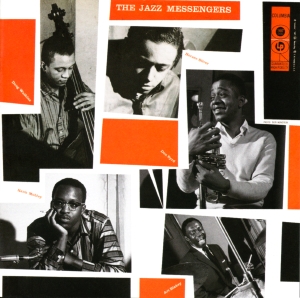
Art Blakey with the Original Jazz MessengersImage via Wikipedia If you're looking for tips on how to memorize music, then take a look at my latest article:
http://ezinearticles.com/?How-To-Play-Piano-Without-Sheet-Music&id=5861178

There was a time when the great pianists would appear on stage without music in front of them. Clara Schumann seems to have been the first to perform from memory, and for this she was considered "insufferable," pretentious, and disrespectful toward the composers who wrote the works she played. Today though, many consider memorization one of the most important aspects of piano playing.

Most books will discuss the how-to of memorizing stress the importance of understanding the intricacies of musical form. When you approach a piece you want to learn, the suggested practice is to break it down into various components, so you can see the exposition of the theme, the introduction of other themes, a development section, key relationships, modulatory passages, and so on. Of course, we can get even more complex about it. With the advent of home computers, it won't be long before every piano student is required to analyze all pitch series permutations and rhythmic stratifications on every page of an assigned piece!

I'm kidding of course. But it is easy to get carried away with theoretical detail, and the dryness of an approach such as this cna betray the initial thrill which brought us to the keyboard in the first place.

In order to memorize a piece, it helps to analyze the music in a tactile, practical sort of way. Here's what I mean. Take a work you wish to memorize. Start with the opening phrase, and learn to play it without the music. Then, pause for a moment, to consider this: If you were a composer, how would you continue? You might, for example, repeat the original idea starting on a different pitch; or turn it upside down; or embellish it. There are, of course, countless possibilities.

Now take a look at what the composer of the piece actually did. Is what comes next very ordinary, or is it surprising? Note these first two phrases. Does the second answer the first? Are they short or long? Are they of equal size? Are there rhythmic ideas which repeat? Is there a natural rise and fall in the shape of the phrases, or do they leap and zigzag?

Let's also consider the physical demands this music is making. Is there a tricky fingering that comes up at a certain point? If so, play it over a few times, to remember the feeling. Are the hands playing together, or alternately? Are they moving in opposite directions? On which notes does the thumb go?

Each time you ask one of these questions, play those first phrases over before answering. Then, close the book.

You are ready to try playing without the book. When you hit your first blank moment (which might pop up right away), open the book and find the spot in the music you couldn't remember. Play through it a few times. At the beginning, you might have to play for a while just to memorize the notes. Later, there will be just a spot here and there that will cause problems. In those cases, you might want to imagine a picture which you can associate with each section of the music. It can be anything at all, like ocean waves for arpeggios, or raindrops for staccato passage. Then, close the book again.

You can repeat this process over and over until you are sure of the music. Then, you'll want to move on to the next part of the work, thinking again about how the composer decided to continue, what the shape is, and what configurations you will find your fingers in.

Each time you hit a blind spot, you should refer to the printed page. If you hit the same blind spot over and over, it's important to "analyze it in the context of the phrases which come before and after (including, for example, how your "ocean" becomes a "storm," and so on). By repeatedly closing the book, you are forced to confront any part of the music which is not completely clear to you. each time you forget, you are actually getting an opportunity to deepen your understanding of the piece!

When the entire work is memorized, it will be necessary to test your ability to play it every so often, because some memorization is only short term- and it is only through constant questioning and evaluating that a deeper kind of learning takes place.

-- From Keyboard Tricks Of The Trade

The advantages to following this routine are many. What have you discovered that works for you?
I've used Jermaine Griggs and Yoke Wong's music resources and lots of practice!


    www.PlayPianoTips.com


"Jazz washes away the dust of every day life." -- Art Blakey
Enhanced by Zemanta

Tips to Finding Free Piano Tabs

Sheet Music for Twinkle Twinkle Little Star.Image via WikipediaMany piano players, especially those who are good at  improvising, as well as pianists who prefer to develop their own style of playing prefer to use piano tabs (chord charts) instead of sheet music.

Piano tabs offer great flexibility and versatility while reading sheet music, although able to improve your technical proficiency, limits you to a technical style of just reading the notes. The Internet has a huge selection of free piano tabs available and they’re quite easy to find when you consider the tips below.
 
Places to Find Free Piano Tabs

Piano tab databases allow you to copy, save, or download their piano tabs. Sometimes, their entire database is free to access. Other times, you need to pay a membership fee or per tab. With tab search engines, you need to specify the piece you require piano tabs for and they’ll produce a list of websites that have them.

Piano Tutorial Websites and Forums

Websites and forums that teach or help you to play the piano for free usually have free piano tabs as well.
Enhanced by Zemanta

Jazz Piano Tutorial-Easy Does It

Teaching music with a steady beat:

Standardized testing shows that children with steady beat independence are better readers and more successful in mathematics. STEADY BEAT seems to help in areas of concentration, to understand space and distance and to have better control of physical movements. Here is a website for using a free metronome to help with your child's practicing a STEADY BEAT.
www.freemetronome.com

'Easy Does It' - jazz piano tutorial 

Wonderful playing by Doug McKenzie... enjoy!


Enhanced by Zemanta

Piano Chords: Let Go (Tutorial)

Piano Tutorial: Let Go recorded by DeWayne Woods

Are you looking for the chords to Let Go? Here is a tutorial guide for some piano tips to the song.


www.SmoothChords.com

Play Piano By Ear

Mikey 'G Minor'  - Montreal 1960Image by Mikey G Ottawa via Flickr
I found this very cool article online this morning written by Isaac Whitfield.
It's  called Play Piano By Ear  - Practice Is The Key. I couldn't agree more. I hope you find some interesting tips to help you bring your piano playing to the next level.


Practice is a big part of learning to play piano by ear, but another is natural ability and some musical background. If you have a family member who is a musician and seems to be able to play anything they want, that is natural ability. If not, then there are ways of learning, but it will take a lot of practice to achieve your goal.

Pitch
Those who are lucky to have been born with perfect pitch have no problem at all learning to play piano by ear. If not, more practice! Begin by sitting at your piano. Now close your eyes and strike a note. Without looking at what note you played, identify it. Were you close? Get it right on the money? Keep at it. This is a big part of playing by ear. Note: Make sure your piano is tuned!

Listen And Listen Some More
Play a favorite song on your CD player, and just as the first drill, try to identify what notes are being played. Listen to just the melody. Play it again and listen to the bass line. Play it again and try to identify any other instruments being played. Learn everything about the song. Choose a song that has some easy piano parts in it.

Play The Melody
Now that you have studied this song with your ears, try to play the melody, one note at a time from memory. Play the first few bars over and over. Turn your CD back on and play the first few bars or whatever you can remember. Keep at it until you have learned the basic melody.
 
Association
A big part to learning to play piano by ear is to associate what you hear with the notes on your keyboard. By mastering the first drill of playing a note and identifying it with your eyes closed, this association will hit you like a ton of bricks someday and you will yell-I got it!
 
Take It Slow
Learn the melody first, then begin putting some bass lines into it. If you know basic chords and scales this process will be easier. Hop online and check out some video tutorials. There are audio lessons available as well, created specifically for ear training.
By following these tips learning to play piano by ear can be achieved, but the big word here is practice!
Enhanced by Zemanta

Slow, Soulful Blues Piano - Gospel Blues Piano

 I love the sound of slow, soulful blues. Listen to Willie's amazing piano playing... love the style.

Slow, Soulful Blues Piano - Gospel Blues Piano


My friend dazza from the zone community at hear and play sure can play the blues! You will learn so much from dazza's piano tutorial on playing slow blues. I have posted a chord chart for his chord progressions. Those quick grace notes add such a cool sound!


Learn this at:

http://www.learnasongseries.com
, plus loads of free videos on how to play piano


* Chord Chart

Pick Up - (r.h. notes) Bb, B, D, E

G D/B G

B B/A B D G

C C/Bb, (Eb), E G, (Bb, B, D, E) (C9)

D D/F# C D (D7)

/ D Bb, C A

G D/(Bb) B G

E E/Gb D G (E7 add9)

A A/G C# (A7)

D D/F# C (D7)


All the best,

 -- LadyD I Write for Fortitude. Fortitude is for people who write with passion. http://fo.rtitu.de/1014
Enhanced by Zemanta

Performance and Practice

LONDON, ENGLAND - JUNE 11:  Schoolgirls Kaila ...Image by Getty Images via @daylife


There is a perception that performing and practicing music are two different activities.
Certainly learning the principals of music is an important exercise. That way true performing can be done.

The relationship between performing and practicing is deeply joined together.

Performing itself becomes the greater learning experience because there is tremendous energy that is experienced during a live performance especially in front of a receptive audience.

When the performer picks up on the audience’s energy it seems to push him to new heights of artistic achievement.

Once you experience the adrenaline high of performing before a live audience that thrill becomes enclosed in each practice time.

The true purpose of developing musical ability is evident and the focus of practicing the piano changes.

Now the performing becomes a true learning experience and practicing becomes a preparation to concentrate and magnify that experience.

And so the musician has become an artist bringing artistic discipline to his practice time.

You’re gaining greater control of your instrument and maximizing your overall performance.

You are experiencing true transformation from being a musician to becoming an artist.

Aware of your greater improvement in concentrating, you now have ease in performing. It’s what we call “soul.”

Perhaps this sounds complicated but as music is something that we artists enjoy, practice should be enjoyed, too.

Now you are soaring and taking important steps towards new heights of artistic achievement.


My piano recitals over the years are more than a performance for the musician but rather a family gathering to be enjoyed by all, especially the young artist playing his or her well practiced piece with heart and soul.

One year I gave each one of my piano students a sports bottle with music symbols on it for a gift from teacher to student. The recital was a huge success and the music sports bottles were well received!

http://www.qondio.com/performance-and-practice 


 Just a different perspective on performance and practice.

-- LadyD I Write for Fortitude. Fortitude is for people who write with passion. http://fo.rtitu.de/1014
Enhanced by Zemanta

Gospel Keyboard Chords

I love this blues tutorial! You'll learn the C Blues Scale with correct fingering. Also he'll show you some chords and blues runs that sound very cool in your left hand. And a great way to end a song with a tremelo, you know, shaking those notes back and forth for a snappy, showoff ending!


You will definitely want to have a paper and pencil and jot down these chords and piano runs and riffs. Amazing blues, gospel sounds! Enjoy this piano tutorial.


-- LadyD I Write For Fortitude! http://fo.rtitu.de/1014
Enhanced by Zemanta

I Write for Fortitude

I have a need to express myself, to write about what is in my heart and mind. When I have a good idea on what I want to write about, the words just flow through my fingers at times, like playing the piano. I am passionate about music education. I am most happy to teach piano to all ages. I  also like to organize my thoughts on paper in such a way that you will want to read about music.

I want to introduce you to a new and exciting online magazine called Fortitude. This is where you will find me. I have joined a community of writers and I submit my articles for review. Here is the good news. Once published, I receive money for my article, poem, essay, rant, opinion, etc. on the Front Page and Second Page. On launch day, Fortitude Magazine published my Front Page Music Article! http://fo.rtitu.de/the-three-r-s-of-singing-12

Join us and help take Fortitude to the next level!

-- Piano Diana
http://fo.rtitu.de/1014


Enhanced by Zemanta

Sitting at the Piano

Ready for your first piano lesson? Sitting at the piano should be a comfortable feeling right from the beginning.


Sit up straight facing the center of the piano. Place your feet flat on the floor. If your feet do not reach the floor, it is helpful to have a footstool or books under them when you practice but not absolutely necessary.


Sit high enough to reach the keys easily. Do you have a piano stool or chair at home that moves up and down? If not, pillows or books may be used to help you sit at the correct height when you practice.


Piano posture is important for all beginner and advanced players. Most importantly, you want to be comfortable at the piano. Sitting with your nose directly in the middle of the range of piano keys is the best place to sit. Where is Middle C you ask? You will find that the white key to the left of the 2 black keys is the “C” key. In fact, all of the “C’s” are to the left of the 2 black keys.


After sitting at the piano and practicing for a time, let’s say 30 minutes, I suggest you take a little break. I have found that sewing at the machine, being on your computer and playing the piano for a much longer period of time will cause your shoulders to droop (round shoulders) and gravity will just pull you forwards, plus the backache will begin with a tense neck. For youngsters, 10-15 minutes of practicing every day will show great improvement overall.


Hand Position

Hold your fingers in a nice curved shape. Imagine you are holding a ball in each hand. That is the way the fingers should be curved when playing the piano. Your wrist should be level with your arms. Keep them level as if you’ve placed a rectangular pencil eraser upon your wrists while moving your piano fingers.

Finger Numbers

Left Hand:

5=Pinky, 4, 3, 2, 1=Thumb

Right Hand:

1=Thumb, 2, 3, 4, 5=Pinky

Have someone trace your piano hands and then number your fingers accordingly. Date it when you first begin piano lessons. It will make a wonderful keepsake.

The Piano Keyboard

The keyboard has white and black keys. The black keys are in sets of 2’s and 3’s. When you play down to the left on the keyboard the sounds are lower, bass tones. When you play up to the right on the keyboard the sounds are higher, treble tones.

On the keyboard, the high keys are usually played with the Right Hand. The low keys are usually played with the Left Hand.

Make up some pieces using sets of black keys. Perhaps you could make up a song using the sets of 2 black keys. Then add the set of 3 black keys. If you play all 5 black keys in the high end of the piano, you will hear tones that sound like a lovely Asian piece or flowing, running water. I hope these first steps have been fun and easy for you.

Happy Practicing!


Comments are welcomed and encouraged! Thanks for stopping by. I hope you enjoy your stay at Piano Diana.
Reblog this post [with Zemanta]

Maintain a Groove

(de) Klavier, Tastatur; (en) piano, keys.Image via Wikipedia
 Another great piano man that I admire on YouTube is Mr.Ron
You can go directly to his video http://www.youtube.com/watch?v=IBV7gnH1bho&feature=digest or watch below. You'll learn simple chord progressions and the inversions. But mostly you'll hear Ron say over and over... just keep the groove going. it really does get easier with practice, like anything else.


Comments are welcomed and encouraged! Thanks for stopping by. I hope you enjoy your stay at Piano Diana.
Reblog this post [with Zemanta]

Besame Mucho: Latin Piano Lesson

CD by Nacho Méndez. Boosa nova and rancheras.Image via Wikipedia
I love this song, Besame Mucho. I especially like Diana Krall's version. There's just something about a bossa nova beat.
Willie Myette does a great job teaching diminished approaches. For more information visit http://www.pianowithwillie.com


Watch Besame Mucho - Latin Piano Lessons in Educational & How-To  |  View More Free Videos Online at Veoh.com
Affiliate recommendation:


Thanks for stopping by.
I hope you enjoy your stay at Piano Diana.
Reblog this post [with Zemanta]

Beginner Piano Lesson: Learn to Play My Heart Will Go On

The reconstruction of the RMS TitanicImage via Wikipedia
* Titanic Theme Song

My Heart Will Go On Piano Lesson


Learn piano keyboard lessons from Shawn:

www.webpianoteacher.com

Beginner keyboard lesson can be found here:
http://www.youtube.com/watch?v=GMrHvOl8aMc

 * Related Post with Chords to Titanic
http://pianodiana.blogspot.com/2010/01/celine-dion-my-heart-will-go-on-music.html

Warmest Regards,
LadyD
Reblog this post [with Zemanta]

Happy Valentine's Day!

 Happy Valentine's Day!

 A very nice song that I love for praise and worship, God Will Make A Way, by Don Moen in the key of C can be found on my other blog: http://ladydblog.com/

Video Instruction:
http://www.youtube.com/watch?v=z4iT_sUUvHs

Chord Chart to God Will Make a Way: 

G               D
God will make a way
           C              G
When there seems to be no way.
   C                 G        Em
He works in ways, we cannot see,
C              D
He will make a way for me.

G             D
He will be my guide, 
        C              G
Hold me closely to His side.
     C                      G         Em
With love and strength, for each new day,
C              D
He will make a way, 
C              G
He will make a way.

(Repeat)

Eb                  F             Eb    Bb
By a roadway in the wilderness he leads me.
Eb            F             G
Rivers in the desert will I see.
C                     D
Heaven and earth will fade,
        Bm              Em
But His word will still remain.
C          D             E
He will do something new today!

G               D
God will make a way
           C              G
When there seems to be no way.
   C                 G        Em
He works in ways, we cannot see,
C              D
He will make a way for me.

G             D
He will be my guide, 
        C              G
Hold me closely to His side.
     C                      G         Em
With love and strength, for each new day,
C              D
He will make a way, 
C              G
He will make a way.

     C                      G         Em
With love and strength, for each new day,
C              D
He will make a way, 
C              G
He will make a way.


There's another song that is very popular with some of my high school students:
(I find the melody a little dark at times. I'm not a fan of vampires. This song is played by many.

"Bella's Lullaby" Carter Burwell - Edward Cullen - Twilight - Piano Version


http://www.8notes.com/school/riffs/piano/carter_burwell_bellas_lullaby.asp


The introduction to Carter Burwell's theme for Bella's Lullaby from the film Twilight is in D major, but uses a G minor instead of the usual G major. The G minor is often with an extra E to make G minor 6

 This sets up a slightly mysterious romantic atmosphere. Make a rocking back and two pattern out of these chords and you have a sound which could have been written by Schumann or Janacek. 

 Later when the main theme arrives we have moved into A minor, but the scale used is a bluesy scale.


Warmest Regards,
LadyD
Reblog this post [with Zemanta]
Related Posts Plugin for WordPress, Blogger...

Featured Post

How To Play Hold On

© copyright 2017– All rights reserved

PianoDiana

SheetMusicPlus

Early Black Friday Coupon Cyber Week Coupon 50% Off International Shipping
